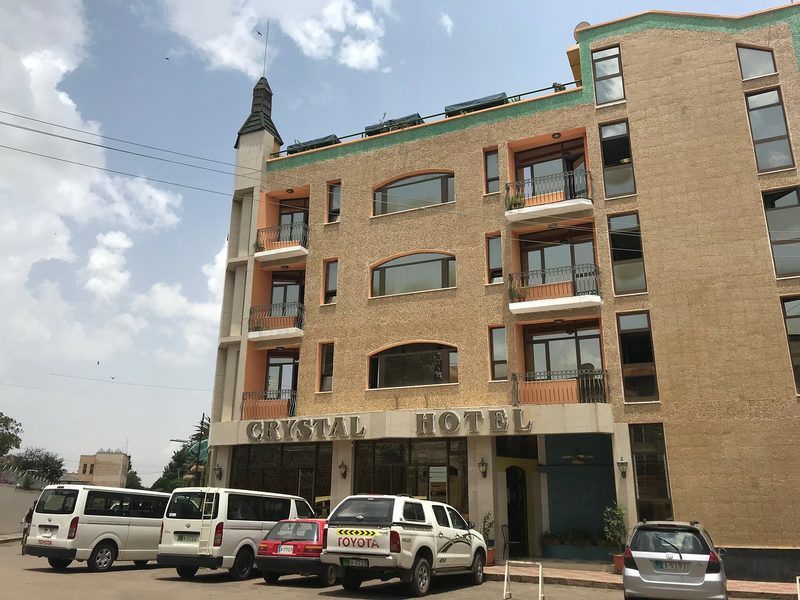

Things to Do in Asmara in February
February weather, activities, events & insider tips
Low Season · Budget Friendly
February Weather in Asmara
Temperature, rainfall and humidity at a glance
74°F (23°C)
High Temp
41°F (5°C)
Low Temp
0.1 inches (3 mm)
Rainfall
70%
Humidity
⚠ The UV index hits 8 at 2,325-metre (7,628-foot) elevation. Thinner atmosphere filters less radiation than at sea level. Sunburn arrives fast. Unprotected skin reddens within 20 to 30 minutes of midday exposure. Sunscreen, hat, sunglasses are daily essentials, not optional extras.
⚠ Expect an 18°C (32°F) swing between afternoon highs and overnight lows. Hypothermia is not the risk. But discomfort is real. Evening patios and dawn walks demand a proper insulating layer. The shift from warm to cold slams in once the sun drops behind the western escarpment around 6 PM.
Is February Right for You?
Weigh the advantages and considerations before booking
Advantages
- + February is deep dry season in Asmara, with virtually zero meaningful rainfall and cloud-free highland skies that turn the UNESCO-listed Art Deco facades along Harnet Avenue into a photographer's fever dream during golden hour. The 23°C (74°F) afternoons are as comfortable as walking weather gets anywhere on the continent, and the low-angle winter sun picks out architectural details on the Fiat Tagliero Building and Cinema Impero that flatten into shadow by April. Pack light layers. Bring sunscreen. Shoot early.
- + Fenkil Day on February 10 opens a window into Eritrean national identity that no museum visit replicates. The commemorations, parades, and evening gatherings along Liberation Avenue draw crowds of locals who are often happy to explain the significance to outsiders. You will see an Asmara that does not perform for tourists because there are almost none around. Worth it.
- + February sits at the absolute floor of Asmara's already-thin tourist traffic. The practical effect is that you will likely be the only foreigner at the Medeber recycling market watching artisans hammer oil drums into cookware, and the macchiato bars along Harnet Avenue feel like neighbourhood joints rather than Instagram stages. Permits for travel outside the capital, which can take days during busier periods, tend to process faster when the system is not backlogged. Book now.
- + The highland air in February is dry enough that the 70% humidity reads as comfortable rather than sticky, nothing like the coastal swelter of Massawa 2,325 metres (7,628 feet) below. Mornings carry a crispness that burns off by ten, and evenings cool sharply enough that sitting outside a pasticceria with a cortado and watching the passeggiata feels more Mediterranean than East African. It is, frankly, one of the most pleasant urban climates on earth this time of year.
Considerations
- − Nights plunge to 5°C (41°F) and sometimes below, which blindsides travelers who packed for an African capital at the equator. Asmara sits at 2,325 metres (7,628 feet), and after dark the temperature swing can hit 18°C (32°F) in a single day. If you left the fleece at home, you will regret it by your first evening walk. Pack fleece.
- − Getting to Asmara remains difficult. Direct international flights are limited to a handful of carriers connecting through the Gulf or Addis Ababa, schedules shift without warning, and the visa process requires patience and paperwork that rewards planning months ahead rather than weeks. February's low season means no extra flight capacity to compensate for cancellations. Start early.
- − Travel outside the capital requires a government-issued permit, and spontaneous day trips are not possible. Even the spectacular descent to Massawa by road or the heritage railway needs advance paperwork. The bureaucracy is not hostile, just slow, and February's skeleton-staff offices do not speed things up. Plan your out-of-city excursions before you arrive, not after.
Best Activities in February
Top things to do during your visit
UNESCO Art Deco Architecture Walking Circuit
Asmara's modernist architecture is the reason UNESCO inscribed the entire city centre in 2017, and February's bone-dry skies and 23°C (74°F) afternoons make the walking circuit as physically comfortable as it gets. Start on Harnet Avenue where the Rationalist and Novecento facades line up like an open-air museum of 1930s Italian design ambition, then work south toward the Fiat Tagliero Building, a futurist petrol station shaped like an aircraft with fifteen-metre cantilevered concrete wings that engineers still argue should not be standing. Cinema Impero's Art Deco ticket lobby still smells faintly of the same wood polish it has used for decades. The February light is low enough to rake across the ornamental plasterwork and cast the kind of deep shadows that make architectural photography worth the effort. Morning walks are best, both for the light and because by early afternoon the sun at this altitude will remind you that UV index 8 is not a suggestion. Allow a full day to do the circuit properly. Rushing it is the surest way to miss the smaller Cubist doorways tucked into residential streets behind the cathedral.
Booking Tip: Licensed local guides who specialise in architectural history can be arranged through your accommodation or at the tourism office on Harnet Avenue. Book at least a week ahead, as February's limited guide pool means last-minute requests often go unanswered. See current guided tour options in the booking section below.
Massawa Coastal Day Excursion via the Highland Escarpment Road
The road from Asmara down to the Red Sea port of Massawa drops 2,325 metres (7,628 feet) in roughly 115 kilometres (71 miles) of switchbacks carved into the escarpment, and in February the air is clear enough to see the Dahlak archipelago shimmering on the horizon before you are halfway down. The drive passes through climate zones like pages in a textbook: highland eucalyptus gives way to dry thorn scrub, then to the salt-crusted heat of the coastal plain where the temperature jumps from Asmara's 23°C (74°F) to Massawa's 32°C (90°F) within an hour. Massawa itself is a half-ruined Ottoman and Italian port where coral-block buildings crumble into turquoise water and the smell of grilled fish and diesel fuel mixes with the sea breeze off the Red Sea. The old town on Batse island, connected by a causeway, still shows bullet scars from the liberation war. February is ideal because the coastal humidity has not yet spiked to its summer extremes, and the sea is calm enough for a boat ride around the harbour. You will need a travel permit arranged in advance, and starting before dawn gets you to Massawa before the worst heat.
Booking Tip: Arrange transport and permits through your accommodation at least five days before your intended travel date. A full day is the minimum. Overnight in Massawa lets you catch the fish market at dawn. Check the booking section below for current excursion options that include permit assistance.
Highland Coffee Culture Circuit
Eritrea's Italian colonial period left behind many things. But the one Asmarinos kept most fiercely is the espresso machine. The macchiato bars along Harnet Avenue and the side streets radiating from the cathedral have been pulling shots on vintage lever machines since before most specialty coffee roasters in London or Melbourne existed, and the beans are Eritrean-grown highland arabica roasted dark in the Italian style. February mornings, when the air is cool enough to sit outside without squinting into heat haze, are when the ritual works best. Order a macchiato and watch the city's morning passeggiata develop: men in pressed shirts reading Tigrinya newspapers, women in white netela shawls heading to Enda Mariam Orthodox Cathedral for morning prayers, and everywhere the hiss and tap of espresso preparation that sounds identical to a Roman bar. The pastries are the other half of this circuit: flaky cornetti filled with custard, biscotti dry enough to dunk properly, and the occasional baklava nod to the Ottoman layer beneath the Italian veneer. Walk between three or four different bars in a morning, because each has its own roast profile and regulars, and the cumulative effect is a portrait of Asmara's social life that no guided tour replicates.
Booking Tip: No booking needed. This is self-guided and best done on foot between roughly 7 AM and 11 AM. The circuit runs naturally along Harnet Avenue and the streets surrounding the central cathedral. For structured food and culture walks, see current options in the booking section below.
Medeber Market Artisan Quarter Visit
Medeber is not a market in any sense a Western traveler would recognise. It is a large open-air recycling workshop where metalworkers, carpenters, and cobblers turn the detritus of industrial civilisation into functional goods using techniques that owe more to ingenuity than machinery. Old oil drums become charcoal stoves under a hail of hammer blows. Rubber tyres are sliced into sandals with nothing but a knife and a pattern scratched into concrete. Flattened tin cans become coffee pots that, improbably, work. The noise is relentless: the ring of metal on metal, the rasp of hand saws through hardwood, the shouts of workers coordinating over the din. February's dry air keeps the whole quarter from becoming the mud pit it turns into during the summer rains, and the morning light filtering through corrugated iron roofing gives the place a chiaroscuro quality that photographs extraordinarily well. Go before noon, when the artisans are freshest and most willing to demonstrate their craft. The smell of hot metal, wood shavings, and the charcoal braziers where workers heat their tea stays with you longer than any temple incense.
Booking Tip: Arrive independently in the morning and explore freely. Hiring a Tigrinya-speaking guide transforms the visit because the artisans will explain their processes in detail when they can communicate comfortably. Arrange a guide through your accommodation at least two days ahead. See the booking section below for current cultural tour options that include Medeber.
Eritrean Highland Cycling Routes
Eritrea is Africa's dominant cycling nation, and the highlands around Asmara are where that culture lives. February's dry roads, cool mornings, and minimal traffic outside the capital make it the strongest month for riding the plateau routes that Eritrean professionals use as training grounds. The terrain south of Asmara rolls through eucalyptus groves and terraced farmland at a steady 2,200 to 2,400 metres (7,200 to 7,900 feet), which means the air is thin enough to humble sea-level lungs but the gradients are manageable for anyone with moderate fitness. The road surface varies from decent asphalt to packed gravel, and the reward for climbing is descents with views across the highland escarpment that dissolve into the haze of the western lowlands. You will share the road with local cyclists on steel-frame bikes who will either wave or draft behind you depending on your pace. The sound of the ride is wind, birdsong, and the occasional truck grinding gears on a hill. Mornings are best before the UV peaks. By early afternoon the sun at this altitude turns exposed skin pink in under thirty minutes.
Booking Tip: Bicycle rental is limited in Asmara. Arrange through your accommodation or a local cycling club at least a week in advance, and confirm the bike's condition before committing. For organised cycling experiences with route guidance and mechanical support, check the booking section below.
Dahlak Archipelago Boat Excursion
The Dahlak Islands sit in the Red Sea roughly 60 kilometres (37 miles) off Massawa, and February's calm waters and clear visibility make them accessible in a way that the summer chop and heat do not allow. The archipelago is largely uninhabited, the coral reefs are untouched by mass tourism, and the water temperature hovers around 26°C (79°F), warm enough for extended snorkelling without a wetsuit. The islands themselves are flat, wind-scoured, and dotted with the ruins of Ottoman cisterns and pearl-diving settlements that time forgot because nobody came back for them. Getting there requires a boat charter from Massawa, which itself requires the travel permit and the drive down from Asmara, so this is a two-day minimum commitment. The effort filters out casual visitors, which is exactly why the reefs remain in the condition they are. Underwater, the visibility in February regularly exceeds 20 metres (65 feet), and the coral gardens host parrotfish, moray eels, and the occasional hawksbill turtle gliding through water so clear it barely looks like water at all. The silence on the uninhabited islands, broken only by terns and the lap of the Red Sea against bleached coral, is the kind of quiet that recalibrates your nervous system.
Booking Tip: Plan early. You need a Massawa travel permit, a chartered boat, and, ideally, a night on the coast. File the permit ten days ahead. Licensed skippers moor inside Massawa harbour. See the booking section for current island excursions.
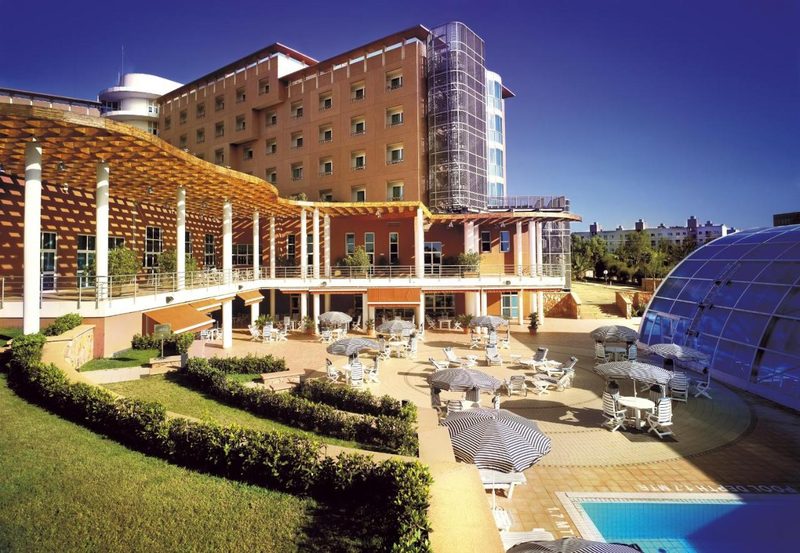
Where to Stay in Asmara in February
Hand-picked hotels across price tiers for February travellers.
February Events & Festivals
What's happening during your visit
February 10
Fenkil Day (Operation Fenkil Commemoration)
February 10 is Fenkil Day, the 1990 liberation of Massawa and a turning point in Eritrea's thirty-year war. Asmara splits the mood: formal parades and speeches along Harnet Avenue in the morning, then families, music, and early bar crowds by afternoon. Visitors get rare access. Eritreans loosen up on national holidays; a chat that might take days starts over suwa and shared food. Evening gatherings around the cinema district glow amber with earned pride. Skip photos of military sites. Civilian scenes are fair and moving.
Packing Checklist
Bookmark this page — your progress is saved between visits
Need the full list with shopping links?
Climate-specific gear, brand recommendations, and what to leave at home.
View Asmara Packing List →Essential Tips
Insider knowledge and common pitfalls to avoid
Insider Knowledge
Walk Harnet Avenue between 5 PM and 7 PM. This passeggiata is no show for tourists. It is daily life borrowed from Italian days and kept because Asmarinos like it. Teenagers weave bikes, elders debate over macchiatos, families parade in neat clothes. Asmara feels like a small Italian town, except Tigrinya replaces Italian and church bells spar with the muezzin.
The cinemas still screen films. Cinema Impero, Roma, and Odeon charge a token fee inside intact Art Deco halls. Eritrean, Ethiopian, and vintage international titles roll in original seats beneath plaster flourishes. Even without subtitles the ambience is surreal.
Asmara restaurants obey two lanes that rarely merge. Eritrean lane: injera topped with zigni, shiro, and hamli, eaten by hand. Italian lane: fresh pasta, wood-fired pizza, espresso from machines older than the staff. Both traditions would pass muster in their motherlands, and February chill makes rich stews and carb loads taste perfect.
Photocopy your passport and visa and store them apart from the originals. Police checkpoints inside the city are routine, polite, and slow if you lack ID. Locals handle them with a nod. You should too.
Avoid These Mistakes
Pack for equatorial Africa and you will still shiver. Asmara sits at 2,325 metres (7,628 feet), and February nights at 5°C (41°F) are not a minor inconvenience but a real comfort problem if you brought only shorts and sandals. First-time visitors complain about one thing: cold after dark. The city's shops do not stock the warm layers a Western traveler expects. Bring fleece. Bring socks. Thank yourself later.
Do not photograph soldiers, police stations, government buildings, the airport perimeter, bridges, or the port at Massawa. The prohibition is enforced. Consequences are serious. No shot is worth the interaction. Shoot architecture, markets, street life, landscapes. Ask first. When in doubt, lower the camera.
Do not assume you can arrange travel permits after arrival. The bureaucratic process moves at its own pace. February office hours are short. Last-minute applications fail. Every excursion outside the capital, including the Massawa road trip and the railway, needs paperwork filed days in advance. Arrive without a plan and you will spend extra days in Asmara. Not terrible. But not what you came for.
Explore More Activities in Asmara
Didn't see anything interesting yet?
Browse Viator's full catalog of tours, day trips, food experiences, and private guides in Asmara.
See All Asmara Tours on Viator